Books / Range

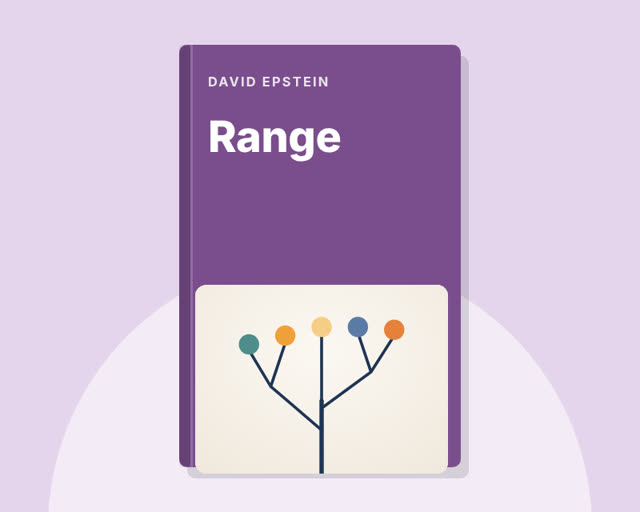
Range by David Epstein — illustrated cover

Range

by David Epstein

David Epstein challenges the popular belief that success comes from picking one path early and practicing relentlessly. He contrasts Tiger Woods, who specialized as a toddler, with Roger Federer, who played many sports before settling on tennis. Early, narrow training works well in kind learning environments like golf or chess, where rules are clear and feedback is fast. Most of life is wicked, though: rules shift, feedback is delayed, and patterns mislead. In those conditions, broad experience, analogical thinking and slow, effortful learning pay off. Epstein shows how sampling careers improves the fit between people and their work, how outsiders often crack problems that stump experts, and how specialists can cling to familiar tools when they should drop them. His message is that range is not a detour. It is a strategy.

7 narrated, animated lessons · about 15 minutes in total.

Play lesson 1

Range summary, chapter by chapter

  1. Lesson 1 · 2:06

    Tiger Versus Roger: Two Paths

    The famous head-start story of early specialization is the exception, and many top performers, like Roger Federer, first sampled widely before narrowing down.

  2. Lesson 2 · 2:19

    Kind Worlds and Wicked Worlds

    Early specialization and repetition work in kind environments with clear rules and quick feedback, but most real-world problems are wicked, and there narrow experience can mislead you.

  3. Lesson 3 · 2:16

    Struggle Now, Learn More Later

    Slow, difficult learning, such as testing yourself, mixing up problem types and wrestling with concepts, feels worse in the moment but builds knowledge that lasts and transfers.

  4. Lesson 4 · 2:11

    Borrow Ideas From Distant Fields

    Thinking by analogy to many different domains, rather than only to similar past cases, helps people solve new problems that no single specialty has seen before.

  5. Lesson 5 · 2:09

    Sample Careers to Find Your Fit

    Quitting and switching is often smart rather than a lack of grit, because experimenting is how people discover strong match quality between who they are and what they do.

  6. Lesson 6 · 2:03

    The Outsider's Fresh Eyes

    People from outside a field, and creators like Nintendo's Gunpei Yokoi who combine well-known tools in new ways, often find solutions that deep specialists miss.

  7. Lesson 7 · 2:10

    Drop Your Tools, Stay Curious

    Experts get trapped by familiar methods and single big ideas, so the habits of range, which include broad curiosity, flexible thinking and deliberate amateurism, keep us adaptable in a changing world.

More books