Books / The Lean Startup

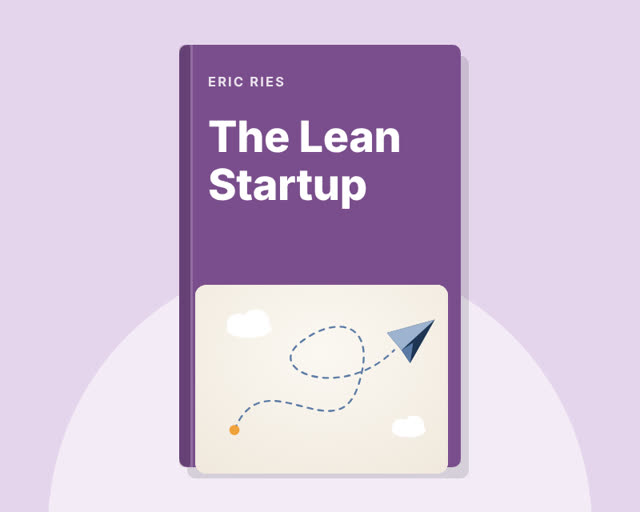
The Lean Startup by Eric Ries — illustrated cover

The Lean Startup

by Eric Ries

Eric Ries argues that most startups fail not because they can't build a product, but because they build something nobody wants. Drawing on his own experience, including the early struggles of the company IMVU, he proposes a scientific approach to entrepreneurship. A startup, he says, is any team creating something new under extreme uncertainty, whether in a garage or inside a large corporation. Instead of writing detailed plans, founders should treat their vision as a set of assumptions to test. They build a minimum viable product, measure how real customers respond, and learn whether to stay the course or pivot. Progress is measured by validated learning, not by vanity numbers. The book's core engine is the Build-Measure-Learn feedback loop, and the goal is to move through it as fast as possible, wasting less time, money, and effort.

7 narrated, animated lessons · about 15 minutes in total.

Play lesson 1

The Lean Startup summary, chapter by chapter

  1. Lesson 1 · 2:07

    Why Great Plans Build Unwanted Products

    A startup is any team creating something new under extreme uncertainty, so following a detailed plan often means perfectly building something nobody wants.

  2. Lesson 2 · 2:04

    Validated Learning Is Real Progress

    The true measure of a startup's progress is what it has proven about customers through real experiments, not how much it has built.

  3. Lesson 3 · 2:10

    Find Your Leap of Faith Assumptions

    Every business idea rests on risky assumptions about value and growth, and you should identify and test the riskiest ones first.

  4. Lesson 4 · 2:06

    Start With a Minimum Viable Product

    Build the simplest version that lets you learn from real customers with the least effort, even if it feels embarrassingly incomplete.

  5. Lesson 5 · 2:09

    Beware of Vanity Metrics

    Track actionable numbers, like how groups of customers behave over time, instead of flattering totals that hide whether you are really improving.

  6. Lesson 6 · 2:06

    Pivot or Persevere

    When experiments show your strategy isn't working, change course while keeping what you've learned, rather than pushing on or giving up.

  7. Lesson 7 · 2:08

    Speed Through Build, Measure, Learn

    Success comes from looping through building, measuring and learning as quickly as possible, using small batches so each cycle teaches you more for less.

More books